

US Tariff Upheaval and Global Trade Investigations Prompt Businesses to Seek International Trade Legal Counsel
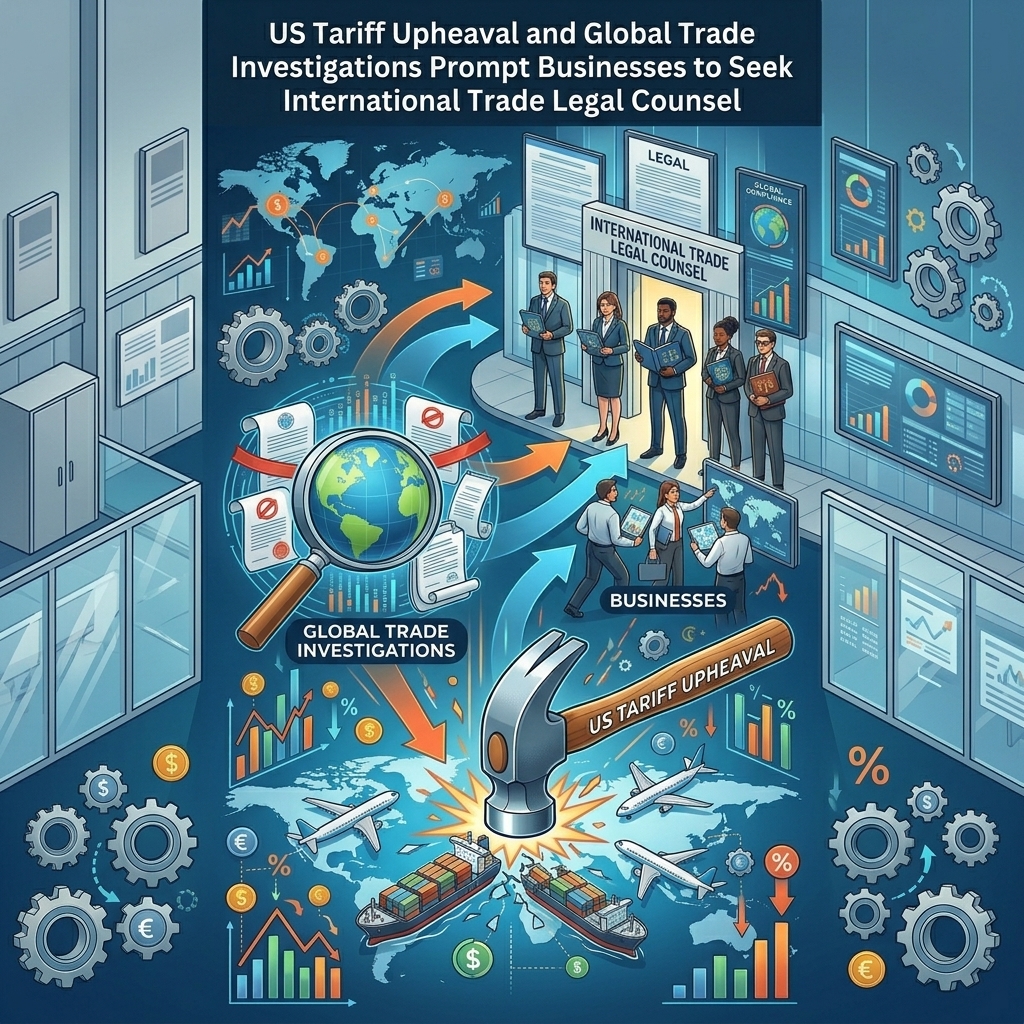
US Tariff Upheaval and Global Trade
US tariffs, Section 301 probes, and $130B refund claims reshape global trade. Businesses must assess risks, review contracts, and act before April deadlines.
MIAMI, FL, UNITED STATES, March 26, 2026 /EINPresswire.com/ -- Within hours of the ruling, the Trump administration signed an executive order imposing a 10 percent global tariff under Section 122 of the Trade Act of 1974. On March 11, 2026, the Office of the United States Trade Representative initiated Section 301 investigations into 16 countries — including China, the European Union, Japan, India, Vietnam, Mexico, and Singapore — examining whether their trade practices constitute unfair burdens on US commerce. These investigations carry no cap on tariff rates and no statutory time limit, making them a potentially durable foundation for reimposing duties.The refund process stemming from the IEEPA ruling has added further complexity. The US Court of International Trade has ordered Customs and Border Protection to process refunds on duties collected under the invalidated authority, with total importer claims exceeding $130 billion. More than 2,000 companies have filed refund requests, and 24 US states have separately challenged the Section 122 replacement tariffs in court, arguing the administration exceeded its statutory authority.
For businesses operating internationally, the legal implications are broad. Companies in the 16 nations under Section 301 investigation must assess potential new tariff exposure on their US-bound exports. Importers are reviewing refund eligibility and filing timelines. Supply chain managers are evaluating contract terms — particularly force majeure clauses and price adjustment provisions — in light of the rapidly shifting regulatory environment. The public comment period for the Section 301 investigations closes April 15, 2026, with formal hearings scheduled to begin May 5.
Trade law specialists note that the current environment requires businesses to act proactively rather than reactively. Tariff classification reviews, customs audit preparation, and cross-border contract assessments are among the areas where early legal engagement can reduce exposure. Companies with operations across multiple jurisdictions face the added challenge of navigating divergent national responses to US trade policy, particularly in Asia-Pacific and the EU, where retaliatory frameworks remain under active review.
Businesses seeking legal guidance on international trade matters can search for qualified trade law attorneys by jurisdiction and practice area through Global Law Experts, an international legal directory covering 140+ countries.
John Martin
Global Law Experts
44 870 977 1000
email us here
Visit us on social media:
LinkedIn
Instagram
Facebook
YouTube
X
Legal Disclaimer:
EIN Presswire provides this news content "as is" without warranty of any kind. We do not accept any responsibility or liability for the accuracy, content, images, videos, licenses, completeness, legality, or reliability of the information contained in this article. If you have any complaints or copyright issues related to this article, kindly contact the author above.
