

Global Antibacterial Film Market Outlook 2026-2036: Strategic Trends, Innovation Drivers & Growth Opportunities
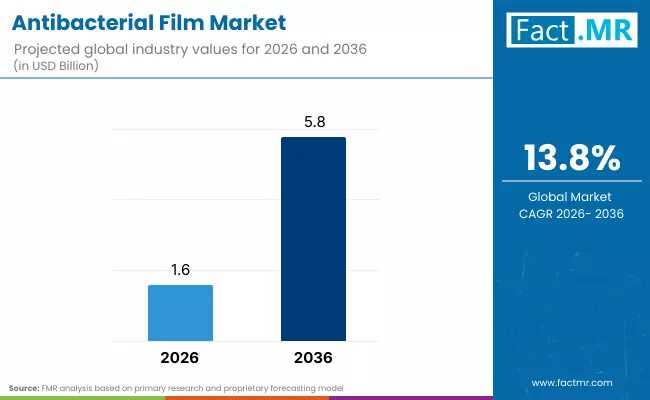
Antibacterial Film Market
Global Antibacterial Film Market Set to Surpass USD 15 Billion by 2036 Amid Intensified Focus on Clinical-Grade Hygiene and Food Safety
UNITED STATES, MD, UNITED STATES, February 6, 2026 /EINPresswire.com/ -- The global antibacterial film market is entering a decade of sustained, high-velocity growth, driven by a fundamental shift in institutional hygiene standards and a surge in demand for active packaging solutions. According to the latest industry intelligence for the 2026–2036 forecast period, the market is projected to expand at a compound annual growth rate (CAGR) of 8.7%, as healthcare, food processing, and consumer electronics sectors transition from reactive cleaning to built-in antimicrobial protection.Request for Sample Report | Customize Report |purchase Full Report - https://www.factmr.com/connectus/sample?flag=S&rep_id=14134
The Strategic Shift: Who, What, and Why
The rapid adoption of antibacterial films is no longer a temporary response to global health crises but a permanent infrastructure upgrade.
Who: Leading manufacturers including Amcor plc, Berry Global, Mondi Group, and Sealed Air (SEE) are spearheading the development of smart films.
What: These advanced materials are specialized polymer layers integrated with biocidal agents—such as silver ions, copper, and zinc oxide nanoparticles—designed to inhibit 99.9% of microbial growth.
Where: While North America currently holds a significant market share due to stringent FDA and EPA regulations, the Asia-Pacific region is the fastest-growing frontier, fueled by rapid urbanization in China and India.
How: Innovation is shifting toward mono-material barrier films and biodegradable substrates like PLA (Polylactic Acid) to align with 2030 sustainability mandates.
Market Dynamics and Industry Relevance
The 2026–2036 forecast identifies three primary pillars driving market valuation:
1. The Rise of Active Food Packaging
Food safety concerns are a primary catalyst. With the World Health Organization (WHO) reporting over 600 million annual cases of foodborne illnesses, the food and beverage sector is adopting antibacterial films to extend shelf life and reduce spoilage. The integration of antimicrobial agents within Post-Consumer Recycled (PCR) content is a major 2026 trend, allowing brands to meet plastic tax requirements without compromising safety.
2. Clinical-Grade Healthcare Environments
The medical sector remains the highest-value application. Beyond wound dressings and surgical drapes, there is a burgeoning demand for antibacterial films on high-touch surfaces in hospitals to combat Healthcare-Associated Infections (HAIs). Residual antimicrobial coatings, which provide continuous protection for up to 7 days, are replacing traditional contact-only disinfectants.
3. Integration in Consumer Electronics and HVAC
As touch-screen technology becomes ubiquitous in public kiosks and personal devices, anti-germ screen protectors and antibacterial housing films have moved from niche accessories to standard industrial specifications. Similarly, antibacterial films are increasingly utilized in HVAC systems to improve indoor air quality (IAQ) by preventing biofilm buildup in ductwork.
Key Data Insights (2026–2036)
Market Segment Projected CAGR Primary Driver
Healthcare & Medical 9.2% Reduction of HAIs and surgical site infections
Food & Beverage 8.5% Shelf-life extension and export safety standards
Sustainable/Bio-based 11.4% EU Packaging & Packaging Waste Regulation (PPWR)
Asia-Pacific Region 10.1% Manufacturing modernization and middle-class growth
The market is moving from commodity competition to technically-driven leadership, states a lead industry analyst. Success in 2026 and beyond depends on documented efficacy and the ability to integrate antimicrobial properties into circular economy workflows.
Technological Innovations: Nanotechnology and Bio-Agents
The forecast period will see a decline in traditional chemical additives in favor of Nanotechnology-enabled solutions. Silver-ion stabilization and graphene-based films are offering higher durability and lower toxicity. Furthermore, Green Disinfectants—using bio-based agents like chitosan and essential oil derivatives—are gaining traction among eco-conscious brands looking to avoid synthetic biocides.
Related Reports
Film Formers Market https://www.factmr.com/report/film-formers-market
Film Adhesives Market https://www.factmr.com/report/film-adhesives-market
Biofilm-Breaking Fungicide Adjuvant Market https://www.factmr.com/report/biofilm-breaking-fungicide-adjuvant-market
TPE Films & Sheets Market https://www.factmr.com/report/tpe-films-sheets-market
About Fact.MR
Fact.MR is a global market research and consulting firm, trusted by Fortune 500 companies and emerging businesses for reliable insights and strategic intelligence. With a presence across the U.S., UK, India, and Dubai, we deliver data-driven research and tailored consulting solutions across 30+ industries and 1,000+ markets. Backed by deep expertise and advanced analytics, Fact.MR helps organizations uncover opportunities, reduce risks, and make informed decisions for sustainable growth.
S. N. Jha
Fact.MR
+1 628-251-1583
email us here
Legal Disclaimer:
EIN Presswire provides this news content "as is" without warranty of any kind. We do not accept any responsibility or liability for the accuracy, content, images, videos, licenses, completeness, legality, or reliability of the information contained in this article. If you have any complaints or copyright issues related to this article, kindly contact the author above.
